Why agent commerce needs x402
AI agents are moving from experimental prototypes to active participants in the economy. They need to buy data, sell insights, and settle transactions without human intervention. The standard HTTP protocol, however, was built for information retrieval, not value exchange. When you add regulatory requirements like Know Your Customer (KYC) and Anti-Money Laundering (AML) checks to this mix, the friction becomes prohibitive.
Traditional payment gateways introduce latency that breaks the real-time nature of agent-to-agent interactions. An agent cannot pause for a three-day manual review or navigate a complex OAuth flow every time it requests a high-value API endpoint. Regulatory compliance introduces significant overhead, often requiring human verification steps that stall autonomous workflows. This creates a bottleneck where the cost and time of compliance outweigh the value of the microtransaction.
x402 solves this by embedding payment logic directly into the HTTP layer. Instead of treating payments as a separate financial transaction, x402 treats them as part of the protocol response. An API can return a 402 Payment Required status, holding the data hostage until the cryptographic proof of payment is verified. This allows for instant, machine-to-machine settlement that satisfies regulatory requirements without breaking the flow of commerce.
x402 allows APIs to request payment before serving data, enabling microtransactions for high-value services like identity verification.
By moving payment verification to the network layer, developers can build agents that are both compliant and efficient. The agent pays, the endpoint verifies, and the data flows. This eliminates the need for third-party payment processors that add latency and complexity, creating a streamlined path for regulated digital assets.
Set up x402 payment middleware
Integrating x402 payment middleware is the first technical hurdle when building agent commerce with KYC/AML checks. This middleware acts as a gatekeeper, intercepting requests before they reach your core logic. It handles the cryptographic signature verification and ensures that the required payment has been settled before granting access to sensitive compliance data.
Think of the middleware as a bouncer at a club. It doesn't care about the conversation inside (your KYC logic); it only cares if the guest has the right ticket (the signed payment). If the ticket is missing or invalid, the request is rejected immediately, saving you from processing unauthorized or unpaid compliance checks.
Install dependencies and initialize the SDK
Start by installing the official x402 SDK for your backend environment. This package provides the necessary utilities to parse payment headers, verify signatures, and interact with the underlying blockchain for settlement confirmation.
npm install @x402/sdk
Once installed, import the SDK in your entry point. You will need to configure it with your wallet credentials. This wallet is critical—it signs the requests on behalf of your agent or service, proving identity and authorizing the payment flow. Ensure your private keys are stored securely in environment variables, never in source code.
Configure the wallet and middleware
With the SDK in place, initialize the middleware in your application server. This involves creating a middleware function that wraps your API routes. The middleware will inspect incoming requests for the x402 payment header.
import { x402Middleware } from '@x402/sdk';

app.use(x402Middleware({
  wallet: process.env.WALLET_PRIVATE_KEY,
  chainId: 'ethereum-sepolia', // or your target chain
  verify: true // Enforce payment verification
}));
This configuration tells the middleware to verify every request against the specified chain. If the payment is not detected or verified, the request is halted. This step is non-negotiable for maintaining the integrity of your agent commerce system.
Intercept and validate requests
The final step in setup is ensuring your middleware correctly intercepts requests before they hit your KYC/AML endpoints. Test this by sending a request without a valid payment signature. You should receive a rejection error, confirming that the middleware is active and enforcing the payment gate.
Once verified, enable the middleware for your specific routes. This ensures that only paid, verified requests reach your compliance checks, reducing load and preventing abuse. The middleware handles the heavy lifting of cryptographic validation, allowing your business logic to focus on the actual KYC/AML data processing.
Integrate KYC verification logic
To get KYC/AML checks running inside agent commerce, you need to wire the x402 payment layer to a verification provider. The flow is straightforward: the agent initiates a payment, the provider validates the user’s identity, and access is granted only after the transaction clears. This ensures compliance without breaking the autonomous transaction model.
Start by installing the x402 client library and your chosen KYC provider’s SDK. These packages handle the cryptographic signing of payment requests and the secure transmission of identity data. Keep these dependencies updated to avoid signature mismatches during verification.
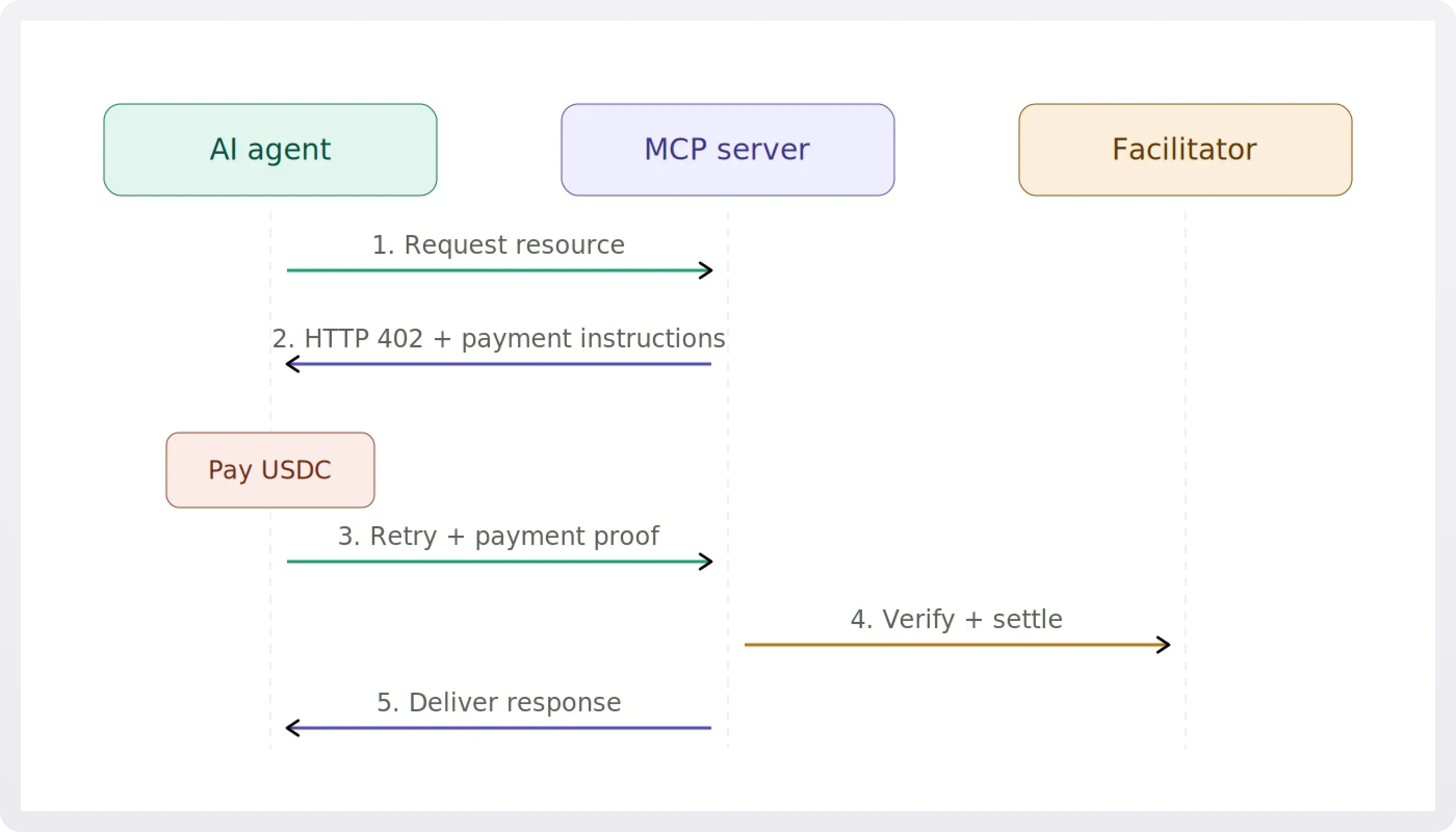
Set up your x402 endpoint to intercept requests that require compliance checks. When an agent attempts to access a protected resource, the endpoint should trigger a micro-transaction. This payment serves as the trigger for the KYC provider to begin the Customer Identification Program (CIP) process.

Link your backend to a KYC provider like Fenergo or a similar service. Once the payment is confirmed on-chain, send the user’s hashed identity data to the provider. The provider will run checks against global sanctions lists and perform risk assessment. You must handle webhooks to receive the verification status securely.
When the provider returns a "verified" status, update the agent’s session state to allow access to the protected resource. If the check fails or times out, revoke access and log the event for audit purposes. This ensures that only compliant agents can proceed with high-value transactions.
| Provider | Avg. Verification Time | Cost per Check | Data Privacy Standard |
|---|---|---|---|
| Provider A | < 5 seconds | $0.50 | GDPR Compliant |
| Provider B | 10-30 seconds | $0.25 | SOC 2 Type II |
| Provider C | < 2 seconds | $1.00 | ISO 27001 |
Choose exact or upto billing
x402 offers two distinct payment schemes for agent commerce: exact and upto. Choosing the right model depends on whether your KYC/AML verification costs are fixed or variable. The exact scheme is ideal for predictable, flat-fee checks, while upto handles dynamic billing where costs fluctuate based on data volume or risk level.
Exact billing for fixed-price checks
Use the exact scheme when the cost of a KYC or AML check is constant per transaction. This model is straightforward: the agent sends a payment payload with a precise amount to the endpoint. The endpoint verifies the payment and returns the compliance status. This approach minimizes complexity and is perfect for standard identity verification or basic sanctions screening.
Upto billing for dynamic costs
The upto scheme is designed for scenarios where the final cost isn't known upfront. For example, an AML deep-dive might require multiple data sources or additional steps depending on the user's risk profile. With upto, the agent sends a maximum allowable amount. The endpoint performs the check and settles the actual cost on-chain, refunding any difference to the agent. This ensures you never overpay for services while guaranteeing the provider is compensated fairly for the work done.
| Feature | Exact Billing | Upto Billing |
|---|---|---|
| Cost Predictability | Fixed per transaction | Variable based on work |
| Best Use Case | Standard KYC checks | Complex AML investigations |
| Refund Mechanism | N/A | Automatic on-chain refund |
| Complexity | Low | Moderate |
Avoid common integration mistakes
Integrating x402 endpoints for KYC/AML checks introduces specific failure points that can halt agent commerce or expose your infrastructure to risk. The protocol’s design assumes strict adherence to cryptographic signatures and on-chain settlement timing. Ignoring these mechanics leads to silent failures or security gaps.
1. Improper error handling in payment payloads
The x402 specification relies on signed PaymentPayload objects to authorize transactions. If your agent fails to validate the signature before processing a KYC request, you risk accepting fraudulent or tampered requests. According to official x402 documentation, every payload is signed by the buyer and settled directly on-chain, meaning the signature is your primary trust anchor. Always validate the signature against the expected public key before initiating any AML checks.
2. Security vulnerabilities in payload construction
Constructing the PaymentPayload incorrectly can expose your agent to replay attacks or unauthorized fund access. Ensure that the payload includes all necessary fields: the transaction hash, the amount, and the recipient address. Use the official x402 libraries to serialize these payloads rather than building them manually. This reduces the risk of encoding errors that could break the on-chain settlement process.
3. Failing to handle on-chain settlement delays
KYC/AML checks often require real-time verification, but on-chain settlements are not instantaneous. Your agent must account for block confirmation times. If you treat the payment as "settled" immediately after the transaction is broadcast, you may grant access before the funds are actually secured. Implement a polling mechanism or listen for on-chain events to confirm settlement status before proceeding with sensitive data processing.
Pre-launch checklist for x402 KYC integration
Before going live, verify these critical steps to ensure a robust integration:
-
Validate all PaymentPayload signatures against the buyer’s public key.
-
Test edge cases, such as failed transactions and expired signatures.
-
Ensure GDPR compliance by minimizing data retention during the KYC process.
-
Implement on-chain event listeners to confirm settlement before granting access.
-
Log all payload construction and validation steps for audit trails.
By addressing these pitfalls, you can build a secure and reliable x402 integration that supports seamless agent commerce.
No comments yet. Be the first to share your thoughts!