Why agent commerce needs x402
The rise of autonomous agents has created a structural mismatch in digital commerce. Traditional APIs were built for human users who pause to read terms, click "I Agree," and verify identity through browser-based forms. Agents, however, operate at machine speed, executing thousands of micro-transactions per minute without human intervention. This efficiency breaks the legacy compliance model, where KYC (Know Your Customer) and AML (Anti-Money Laundering) checks are treated as post-transaction friction rather than pre-transaction requirements.
x402 solves this by embedding compliance into the protocol layer. Instead of treating identity verification as a separate, disconnected step, x402 allows endpoints to require proof of compliance before releasing data or executing a function. For an agent attempting to access sensitive financial data or high-value services, the API responds with a 402 Payment Required status that is contingent on passing a KYC/AML checkpoint. This ensures that the entity initiating the request is verified before any value or data changes hands.
This architecture shifts the burden of compliance from the user experience to the infrastructure. It prevents bad actors from using automated scripts to bypass identity checks, as the agent cannot proceed without the necessary cryptographic or API-based proof of compliance. By enforcing KYC/AML at the point of transaction, x402 creates a secure environment for agent commerce where regulatory requirements are met automatically, enabling trustless interactions between verified entities.
To understand the market context for this infrastructure, it is helpful to look at the broader crypto payment landscape, where x402 is gaining traction as a standard for compliant machine-to-machine value transfer.
The four pillars of compliant automation
Building x402 endpoints for AI agent commerce isn't just about moving money; it's about building a compliant perimeter. When agents transact autonomously, they inherit the same regulatory burdens as human merchants. To keep those endpoints safe and legal, you need to anchor them in the four pillars of KYC/AML automation. These aren't abstract concepts—they are the functional blocks your code must enforce.
1. Customer Identification Program (CIP)
Before an agent can execute a trade, you must verify who (or what entity) controls it. CIP requires capturing and verifying core identity data. In an x402 context, this means your endpoint must accept and validate digital credentials or API keys linked to a verified legal entity. You can't automate trust without a verified foundation.
2. Customer Due Diligence (CDD)
Once identified, you need to understand the risk profile. Standard CDD assesses the nature of the customer's activities and their expected transaction patterns. For AI agents, this involves mapping their operational scope. Is this agent buying low-risk digital goods, or is it interacting with high-risk jurisdictions? Your x402 logic must tag transactions with this risk score before payment processing begins.
3. Enhanced Due Diligence (EDD)
Some transactions or entities trigger higher scrutiny. EDD is the deep dive required for high-risk relationships. If an agent's behavior deviates from its baseline or involves sanctioned regions, your infrastructure must pause and flag the transaction. This pillar ensures that your automated systems don't inadvertently facilitate money laundering by treating high-risk flows as standard.
4. Ongoing Monitoring
Compliance isn't a one-time check at onboarding. It's a continuous loop. Ongoing monitoring requires your x402 endpoints to constantly analyze transaction data for suspicious patterns. If an agent suddenly starts moving funds in a way that contradicts its CDD profile, the system should flag it for review. This real-time vigilance is what separates a static payment gateway from a compliant financial infrastructure.
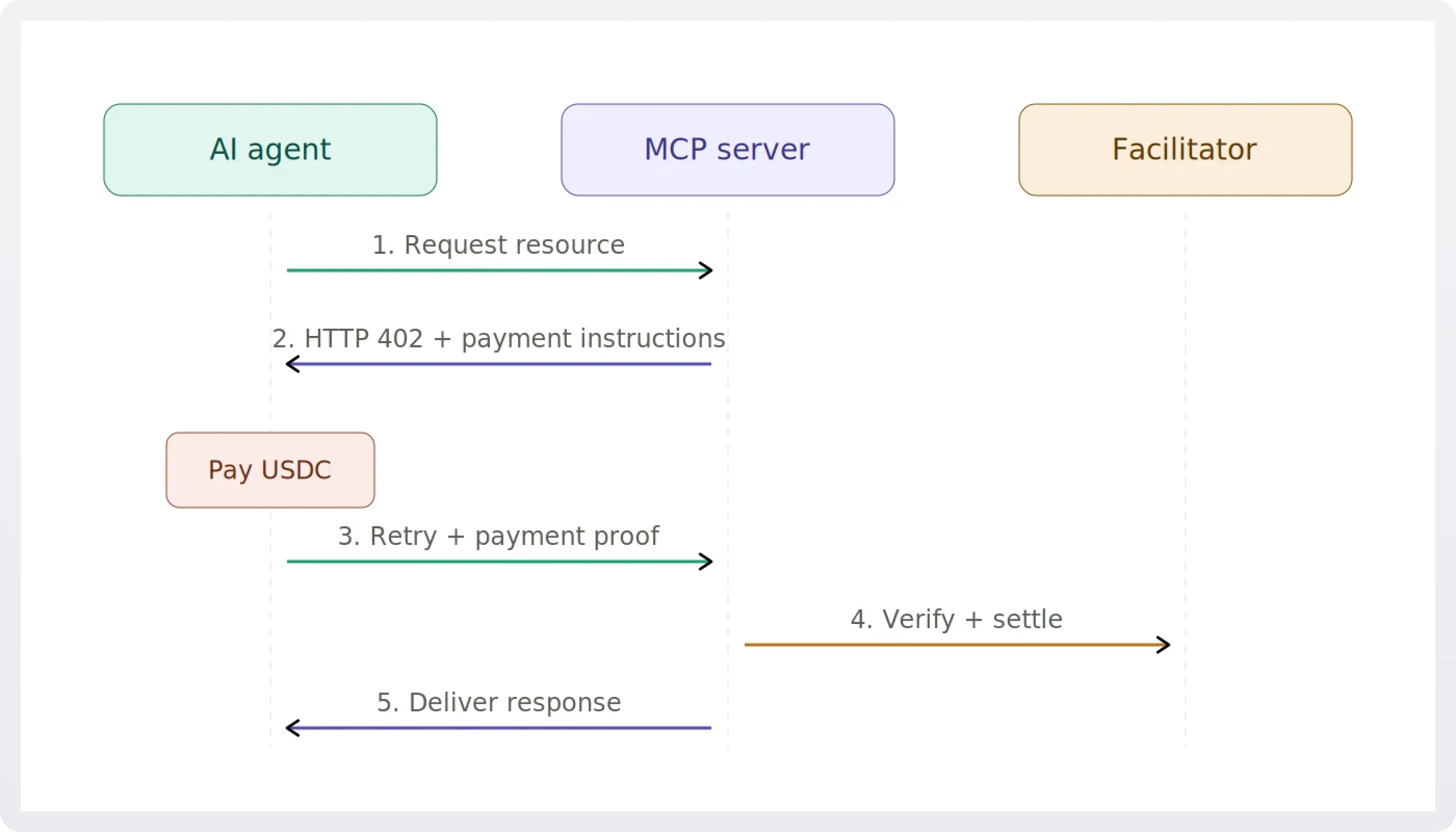
Setting up x402 payment middleware
To route KYC or AML checks through an x402-enabled API, you need to install the necessary dependencies and configure the payment gateway to handle HTTP 402 responses. This middleware acts as the bridge between your compliance logic and the blockchain settlement layer.
1. Install Dependencies
Start by adding the x402 client libraries to your project. Most implementations rely on standard cryptographic packages to handle the signing of payment payloads. For Node.js environments, install the core protocol package alongside your existing HTTP server dependencies.
npm install @x402/core @x402/crypto
2. Configure the HTTP 402 Response
Your API must be able to return a 402 Payment Required status code when a KYC or AML check fails or when payment is needed to proceed. Configure your middleware to intercept requests and validate the user's compliance status before generating the response.
if (!isCompliant(user)) {
  return res.status(402).json({
    message: 'Payment required for KYC verification',
    paymentPayload: generatePayload()
  });
}
3. Sign Payment Payloads
Every PaymentPayload must be signed by the buyer to prevent facilitator fraud. This signature ensures that the payment is authorized and that the funds are settled directly onchain. Use the cryptographic libraries installed in step one to generate these signatures.
Note: Always sign PaymentPayloads to prevent facilitator fraud. Malicious actors could otherwise steal funds or lie about settlement. The signature ensures the buyer's intent is preserved.
4. Test the Integration
Use the Coinbase Developer documentation to test your integration in a sandbox environment. Verify that your API correctly returns the 402 status and that the payment payload is properly formatted for onchain settlement.
-
Install dependencies
-
Configure 402 response logic
-
Implement payload signing
-
Test in sandbox environment
Embedding verification logic into your API flow
You cannot treat compliance as an afterthought in x402 infrastructure. The protocol’s payment-gated design means the API must validate identity before it ever considers a transaction. If you skip this step, you risk processing payments for unverified entities, which violates AML standards and breaks the trust model of agent-commerce.
The integration process involves three distinct layers: dependency configuration, status checking, and payment gating. We will walk through each step to ensure your endpoints reject non-compliant requests cleanly.
Before writing logic, ensure your middleware can handle the HTTP 402 status code. This code signals that payment is required to access the resource. For KYC workflows, this payment often represents a micro-fee for identity verification or a deposit held in escrow. Configure your gateway to intercept standard requests and route them through a compliance checker if the user’s KYC status is pending.

Create a dedicated internal endpoint that queries your identity provider. This endpoint should return a simple boolean or status string (e.g., verified, pending, rejected). Do not expose sensitive PII here. The x402 middleware calls this check before processing the payment. If the status is not verified, the flow halts.
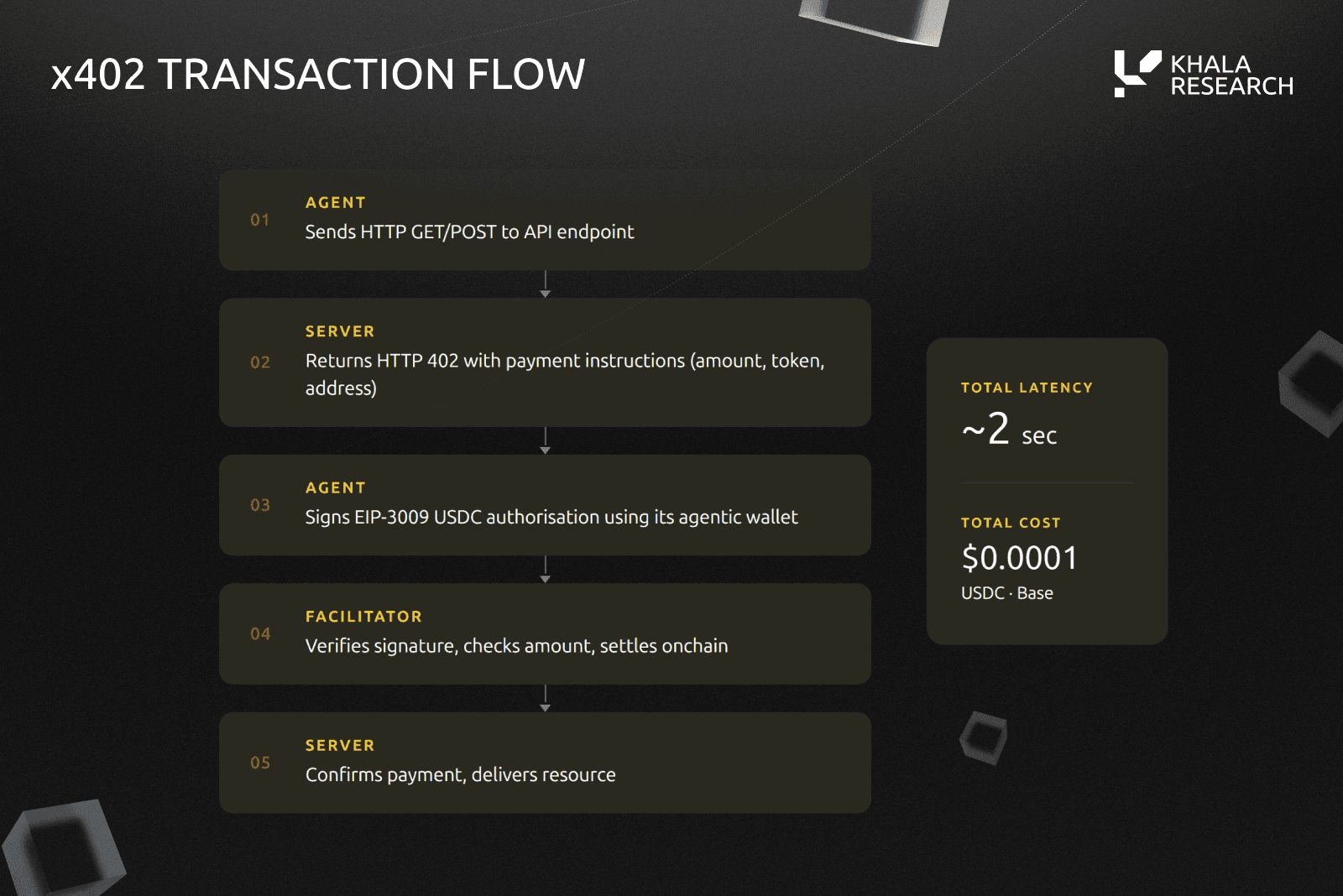
Once the status check passes, the x402 protocol triggers the payment request. This is where the "pay-to-access" model meets compliance. The user pays the required fee, and the system immediately updates their verification status. Only then is the actual API resource unlocked. This ensures that every transaction is backed by a verified identity, satisfying AML requirements.
To understand how this differs from traditional models, consider the authentication layer. Traditional APIs use tokens for access control, but x402 uses payment as the gatekeeper for compliance-sensitive data.
| Feature | Traditional API Auth | x402 Payment-Gated |
|---|---|---|
| Primary Gate | Bearer Token | Micropayment + KYC Status |
| Compliance Check | Post-transaction audit | Pre-transaction requirement |
| Failure Mode | 401 Unauthorized | 402 Payment Required |
This architecture forces compliance to be a prerequisite for service, not an optional add-on. By embedding these checks directly into the x402 flow, you align technical implementation with regulatory necessity.
On-chain settlement and trust
The x402 protocol solves the counterparty risk inherent in traditional agent commerce by ensuring that payment settlement happens directly on-chain. Instead of routing funds through a third-party facilitator who might delay or withhold payment, the signed PaymentPayload is validated and executed by the smart contract itself. This architecture removes the need for trust in the intermediary, shifting reliance to the immutable ledger.
For KYC/AML compliance, this transparency is critical. Every transaction is timestamped and linked to a verifiable digital signature, creating an auditable trail that regulators can inspect without requiring access to private off-chain databases. The buyer's signature proves intent, while the on-chain execution proves completion, satisfying the "proof of payment" requirement for regulatory reporting.
This direct settlement model also mitigates the risk of fraud by malicious facilitators. As documented in the official x402 FAQ, the protocol design ensures that funds cannot be intercepted or altered during transit. The settlement is final, atomic, and visible to all authorized parties, aligning technical security with the strict auditability standards required by financial regulators.
Common compliance: what to check next
Automated commerce introduces new friction points when regulatory obligations meet machine-to-machine transactions. The x402 protocol handles the payment layer, but the compliance logic remains rooted in established frameworks. Developers and compliance officers often ask how these static definitions translate to dynamic, agent-driven workflows.
What are the 4 pillars of KYC and AML?
The four pillars form the backbone of any compliance program. First, internal controls ensure policies are documented and enforced. Second, designated compliance officers provide oversight and accountability. Third, employee training keeps staff aware of evolving risks. Finally, independent testing audits the system’s effectiveness. In an x402 context, these pillars shift from manual oversight to automated rule engines and API-driven validation checks.
What are the 5 stages of KYC?
KYC is not a one-time event but a continuous lifecycle. It begins with Customer Identification (CIP), followed by Customer Due Diligence (CDD) to assess basic risk. Enhanced Due Diligence (EDD) applies to high-risk entities. Ongoing monitoring tracks transactions for anomalies. The final stage is recordkeeping, ensuring data is available for regulators. For agent commerce, this means the "customer" is often an API endpoint, requiring automated identity verification at every interaction.
What are the 5 major elements of KYC?
These elements operationalize the pillars: establishing a customer identification program, conducting due diligence, screening against sanctions lists, maintaining transaction records, and filing Suspicious Activity Reports (SARs). When building x402 endpoints, these elements must be integrated into the payment flow—verifying identity before authorizing the transaction, rather than after.
No comments yet. Be the first to share your thoughts!