Why agent commerce needs x402
Autonomous agents operate at machine speed, but traditional payment rails are built for human hesitation. When an AI agent negotiates a contract or purchases data, it cannot pause to verify a card number or wait for a three-day bank clearance. The friction of legacy payment processing creates a bottleneck that kills the value proposition of agent commerce. Agents need payment infrastructure that is as instantaneous and programmable as the decisions they make.
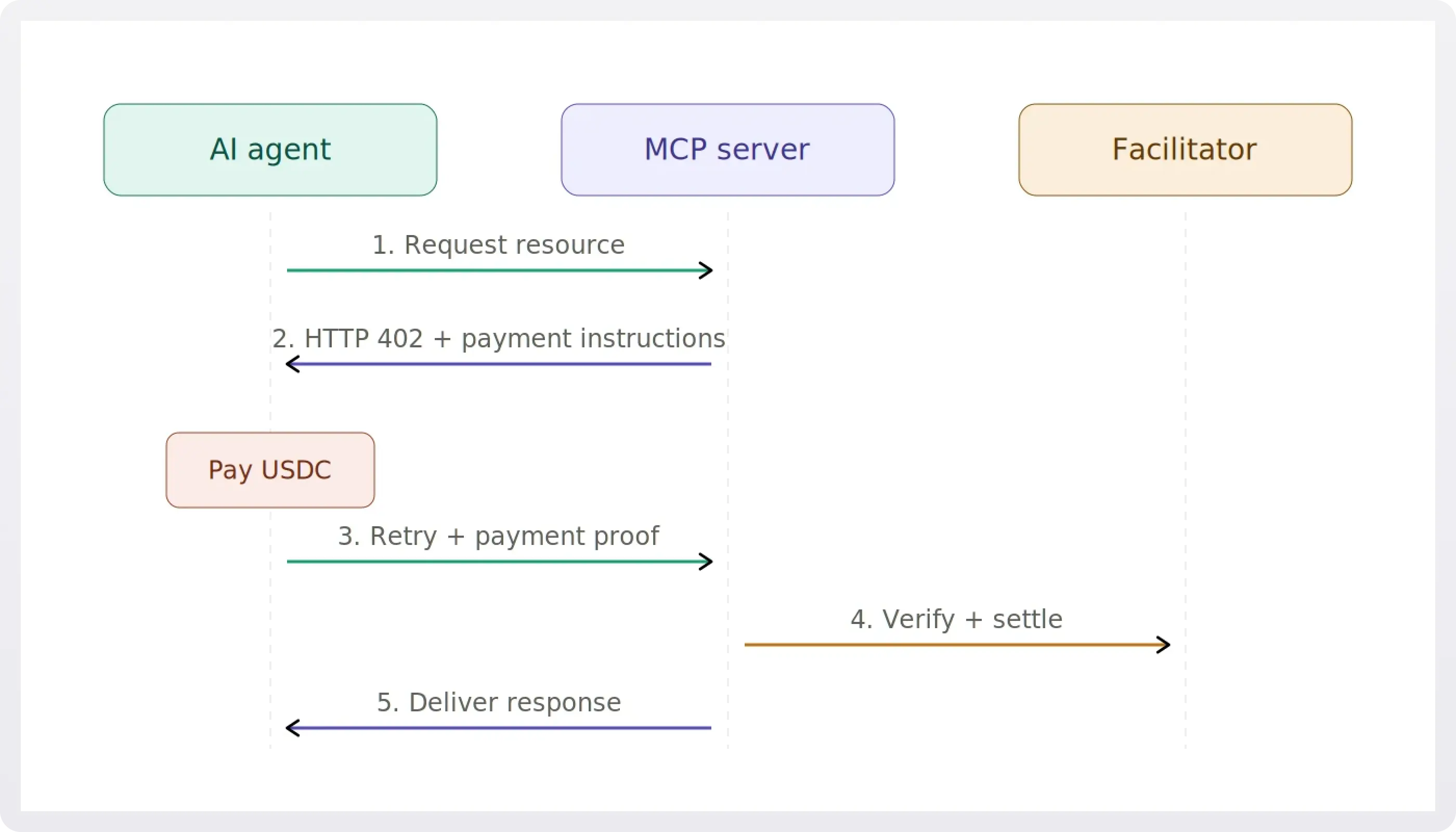
Compliance adds another layer of complexity. Regulatory frameworks like KYC (Know Your Customer) and AML (Anti-Money Laundering) require verifiable identity and transaction trails. Traditional systems often treat compliance as a separate, manual gatekeeping step. x402 changes this by embedding payment verification directly into the HTTP protocol. It uses the standard 402 Payment Required status code to signal that payment is needed before content is delivered, creating a unified path for both commerce and compliance.
This integration is critical for high-stakes environments where trust is paramount. By leveraging on-chain settlement, x402 ensures that every transaction is signed by the buyer and recorded immutably. This provides the auditability required for regulatory reporting without sacrificing the speed agents need to function effectively. The result is a system where financial settlement and identity verification happen simultaneously, removing the latency that currently hinders autonomous economic activity.
To understand the economic context of these settlements, it helps to look at the underlying asset dynamics. The volatility and liquidity of the cryptocurrencies used in these transactions directly impact the reliability of automated payments.
Setting up the x402 payment middleware
Integrating KYC/AML checks into agent commerce requires a robust payment middleware that can handle the new HTTP 402 status code. This setup ensures that agents and users pay for compliance verification before accessing sensitive data or services. The process involves installing the necessary dependencies and configuring your API to recognize and respond to these payment requests.
Begin by installing the x402 client library and any required payment gateway SDKs. For Node.js environments, use npm or yarn to add the x402 package. This ensures your application can construct the necessary payment proofs and interact with the blockchain settlement layer.
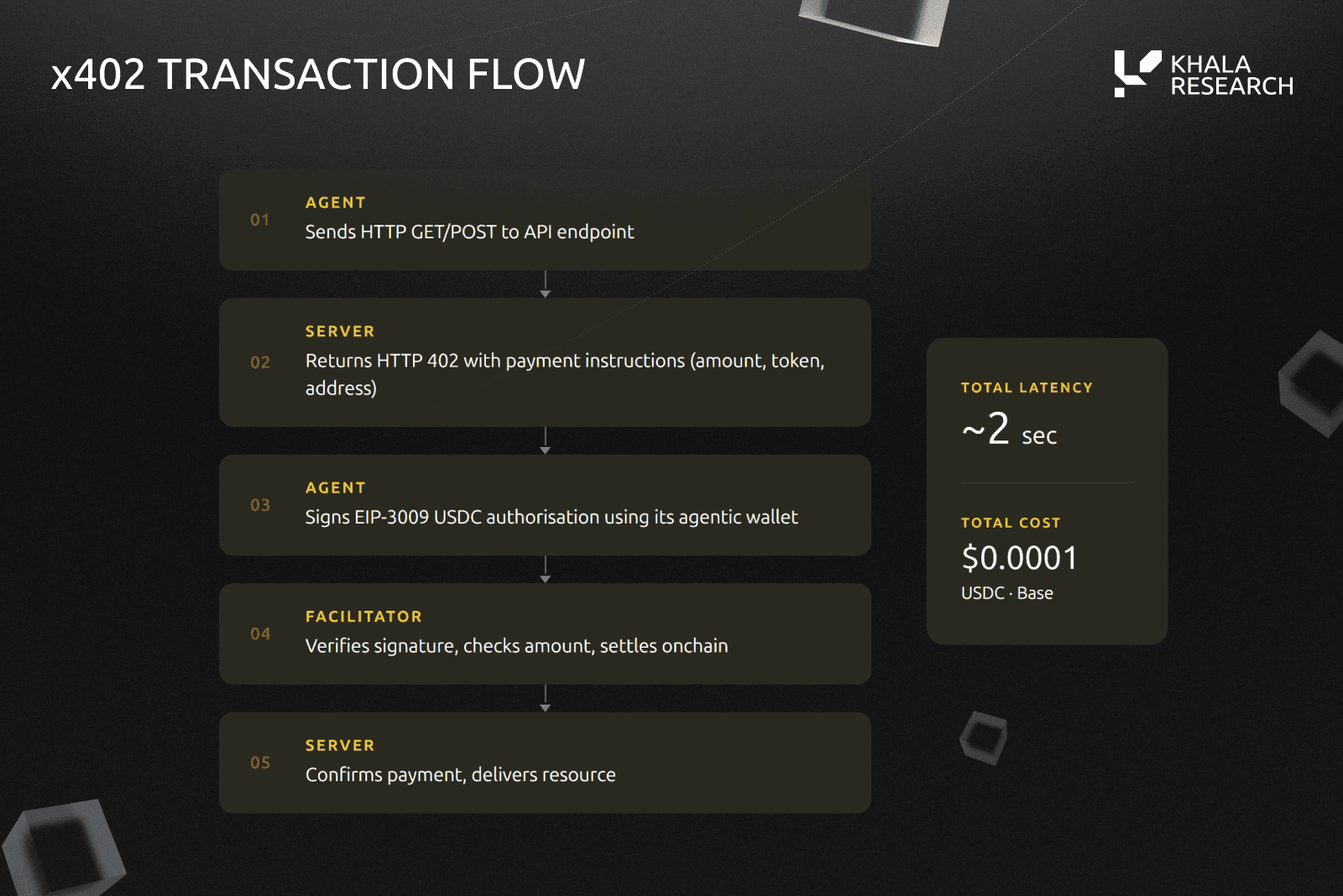
Insert the x402 middleware into your API router before your KYC/AML verification endpoints. This middleware intercepts incoming requests and checks for valid payment proofs. If a proof is missing or invalid, the middleware should return a 402 status code with a payload containing the payment instructions and the required amount.
Once payment is confirmed, the middleware should forward the request to your KYC/AML provider, such as Fenergo or a similar compliance service. The agent must present the payment receipt alongside the user’s identity data. This ensures that only verified and paid-for checks are processed, reducing fraud and ensuring regulatory adherence.
Use a sandbox environment to simulate the full flow: request a KYC check, receive the 402 response, make a test payment, and verify that the compliance check completes successfully. Monitor the logs to ensure that payment proofs are correctly validated and that no sensitive data is exposed during the payment handshake.
By following these steps, you establish a secure foundation for agent commerce that respects both technical standards and regulatory requirements. The x402 protocol provides the necessary infrastructure to monetize compliance checks, ensuring that your service remains sustainable and legally compliant.
Integrating KYC verification logic
Before an x402 endpoint releases funds to an AI agent, the system must confirm the user’s identity and risk profile. This is not just a formality; it is the regulatory backbone of agent commerce. By embedding KYC/AML checks directly into the payment flow, you ensure that agents only transact with verified, low-risk counterparties.
The integration typically follows a three-step logic: check status, validate result, and proceed. First, the x402 endpoint queries a compliance provider like Fenergo or a similar API. This check returns a status—such as "verified," "pending," or "flagged." If the status is not "verified," the payment token is rejected or held in escrow. This prevents unauthorized or high-risk transactions from completing, keeping your platform compliant with global standards.
Different verification approaches impact latency differently. Instant checks are fast but may miss complex risks, while manual reviews are thorough but slow. Choosing the right balance depends on the transaction size and user experience requirements.
Verification Approach Comparison
The table below compares common KYC/AML verification methods in the context of agent commerce latency and risk.
| Method | Latency | Risk Coverage | Best For |
|---|---|---|---|
| Instant API Check | < 2s | Basic sanctions/PEP | Low-value microtransactions |
| Document Review | 1-5 min | Identity verification | Mid-tier agent contracts |
| Manual Underwriting | 24-48h | Full due diligence | High-value institutional deals |
Generating and returning the payment token
The final phase of the x402 integration occurs only after the compliant agent has successfully cleared the user through KYC and AML checks. Think of this moment as a digital toll booth: the gate remains locked until the compliance officer—or automated regulatory system—grants permission. Once approved, the agent generates a signed PaymentPayload that serves as the cryptographic key to use the requested commerce service.
1. Verify compliance status
Before any transaction data is prepared, the agent must confirm that the user’s identity verification and sanctions screening are complete. This step ensures that no funds are routed for high-risk entities. The agent references the internal compliance ledger to validate that the user’s risk score falls within acceptable thresholds defined by regulatory bodies.
2. Construct the PaymentPayload
With compliance confirmed, the agent assembles the PaymentPayload. This object contains the specific details of the transaction, including the asset type, amount, and the unique identifier for the service being accessed. The payload is structured according to the x402 specification, ensuring that all necessary fields are present for on-chain settlement.
3. Sign the payload
The agent signs the PaymentPayload using the buyer’s cryptographic keys. This signature is critical because it proves that the buyer explicitly authorized the payment. As noted in the x402 FAQ, this mechanism prevents malicious facilitators from stealing funds or lying about settlement, as every payload is signed by the buyer and settled directly on-chain.
4. Return the token to the client
The signed PaymentPayload is returned to the client application. This token is now ready to be submitted to the x402 endpoint. The client uses this token to prove payment validity, allowing the service to be delivered without further friction. This completes the loop, turning regulatory compliance into a seamless technical handoff.
Validating on-chain settlement logic
Security in agent commerce hinges on one critical question: can the facilitator simply take the money and run? The architecture of x402 eliminates this risk by ensuring that every PaymentPayload is cryptographically signed by the buyer and settled directly on-chain. This direct settlement model means the facilitator acts merely as a conduit for data, not a custodian of funds. They cannot intercept, delay, or steal the capital because the smart contract logic enforces the release of funds only when the agreed-upon conditions—such as a successful KYC verification—are met.
For compliance officers, this immutability is just as important as the security. Traditional payment processors often act as black boxes, making it difficult to audit the exact flow of funds in real-time. With x402, the transaction history is public and verifiable. This transparency simplifies the audit trail required for AML regulations, as every step of the settlement is recorded on the blockchain ledger. You can trace the exact moment a payment was triggered and the conditions that authorized it, providing a clear, tamper-proof record for regulatory review.
The integration of KYC/AML checks into this flow is handled off-chain or via zero-knowledge proofs, but the financial settlement remains strictly on-chain. This separation ensures that sensitive personal data is not exposed on the public ledger while still maintaining the integrity of the financial transaction. By relying on official documentation from the x402 project, developers can verify that the settlement logic is robust against common fraud vectors, such as double-spending or unauthorized reversals.
Common questions about x402 compliance
Integrating KYC/AML checks into agent commerce via x402 raises specific technical and regulatory questions. Below are the most frequent concerns regarding data privacy, agent autonomy, and settlement security.
No comments yet. Be the first to share your thoughts!