The x402 compliance gap
Standard x402 payment flows are designed for speed and simplicity, allowing AI agents to settle microtransactions without friction. However, this design creates a significant blind spot for regulated industries. When an agent executes a trade or accesses a service, the x402 protocol verifies that the buyer has sufficient funds, but it does not verify who the buyer is. For KYC/AML checks, this absence of identity verification creates immediate regulatory risk for agent-commerce infrastructure.
In traditional finance, Know Your Customer (KYC) and Anti-Money Laundering (AML) protocols are mandatory. The Financial Action Task Force (FATF) guidelines require virtual asset service providers to identify and verify the identity of their customers. Without integrating identity checks into the x402 endpoint, you are effectively allowing anonymous transactions. This anonymity is a primary vector for money laundering, sanctions evasion, and terrorist financing, making non-compliant endpoints legally hazardous.
The technical gap lies in the separation of payment and identity. Coinbase’s x402 documentation outlines how to enable payments for APIs, focusing on the transaction layer. It does not include built-in mechanisms for identity proofing. Consequently, developers must build custom middleware to handle KYC/AML checks before or during the payment process. This often involves integrating zero-knowledge proofs (ZKP) or fiat rails like USDC to maintain compliance without exposing sensitive user data unnecessarily.
Ignoring this gap exposes your infrastructure to severe penalties. Regulatory bodies are increasingly scrutinizing the intersection of AI and financial services. If an AI agent facilitates a transaction for a sanctioned entity, the platform hosting the endpoint can be held liable. Therefore, building x402 endpoints for KYC/AML checks is not just a technical feature but a legal necessity. The goal is to embed compliance into the payment flow, ensuring that every transaction is both settled and verified.
Set up x402 payment middleware
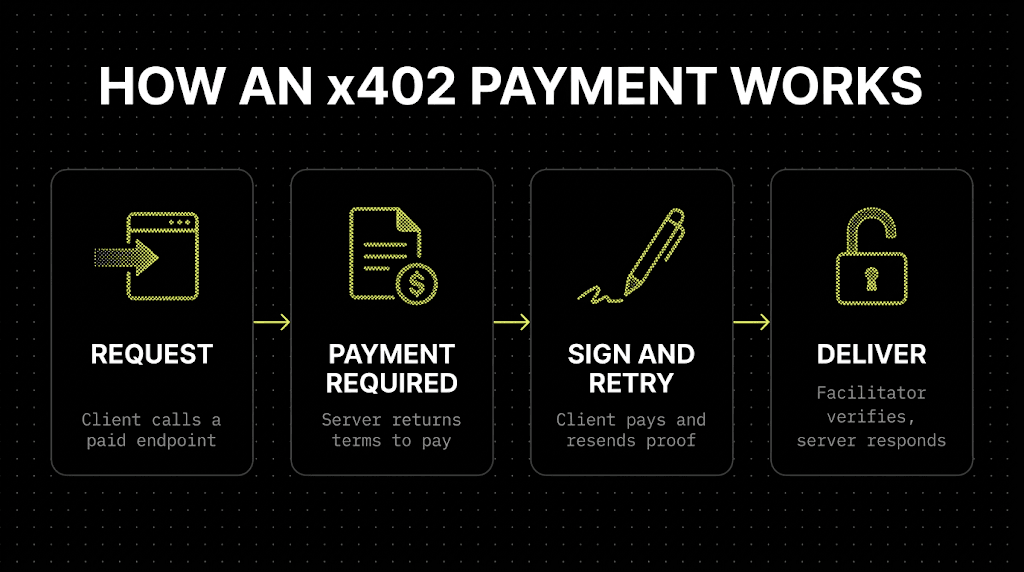
Configuring your API to accept crypto payments is the foundational step for agent commerce. The x402 specification requires your middleware to intercept requests, verify payment status, and return an HTTP 402 response when funds are missing. This ensures that AI agents cannot bypass KYC/AML checks without settling their invoices in stablecoins like USDC.
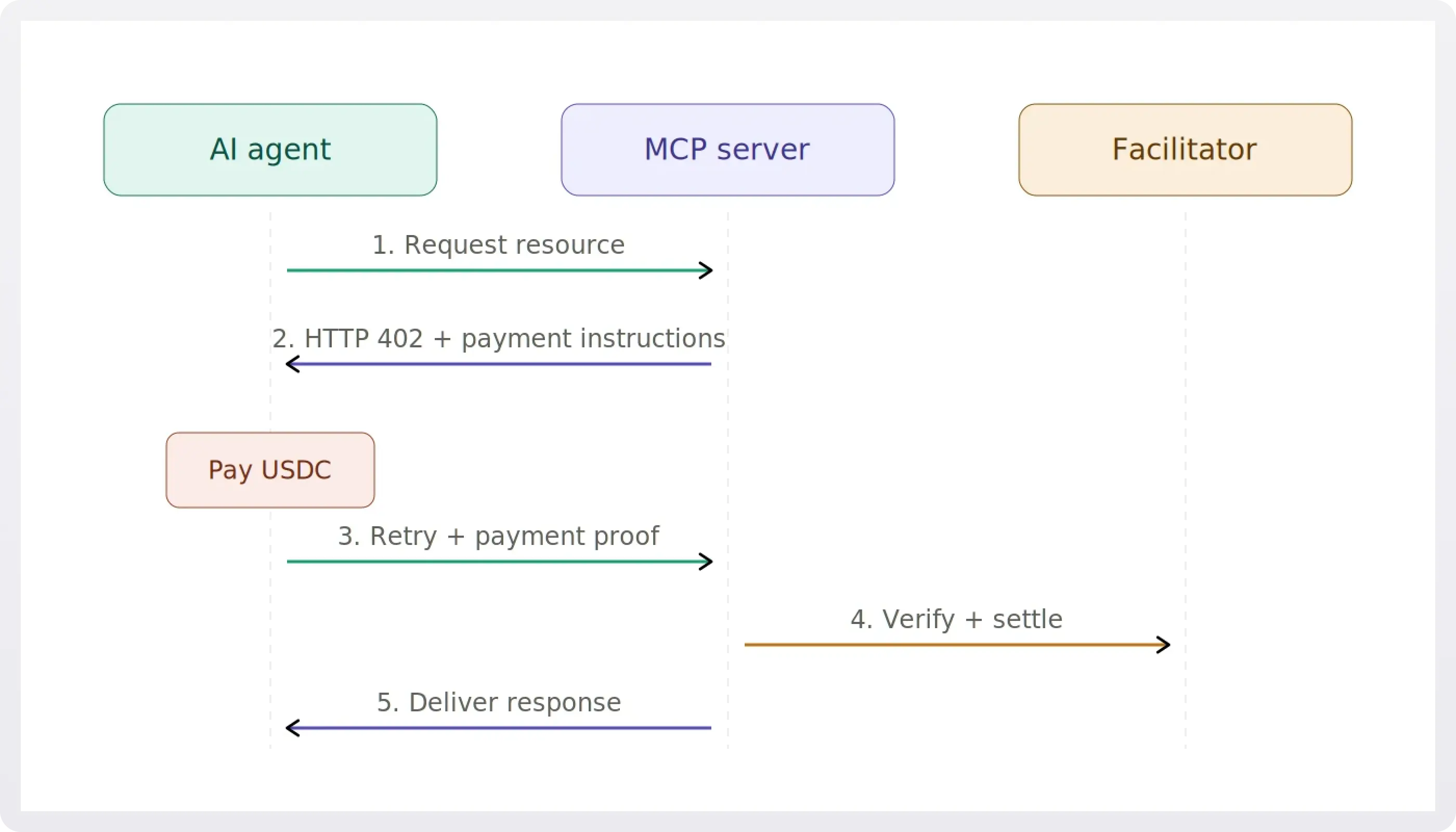
Start by integrating a wallet provider or payment gateway that supports ERC-20 tokens. Your middleware must be able to generate unique payment addresses or invoice IDs for each API call. This allows you to track which agent or user has settled their specific request. Coinbase Developer Documentation provides a quickstart for sellers that outlines the basic integration flow for enabling these payments.
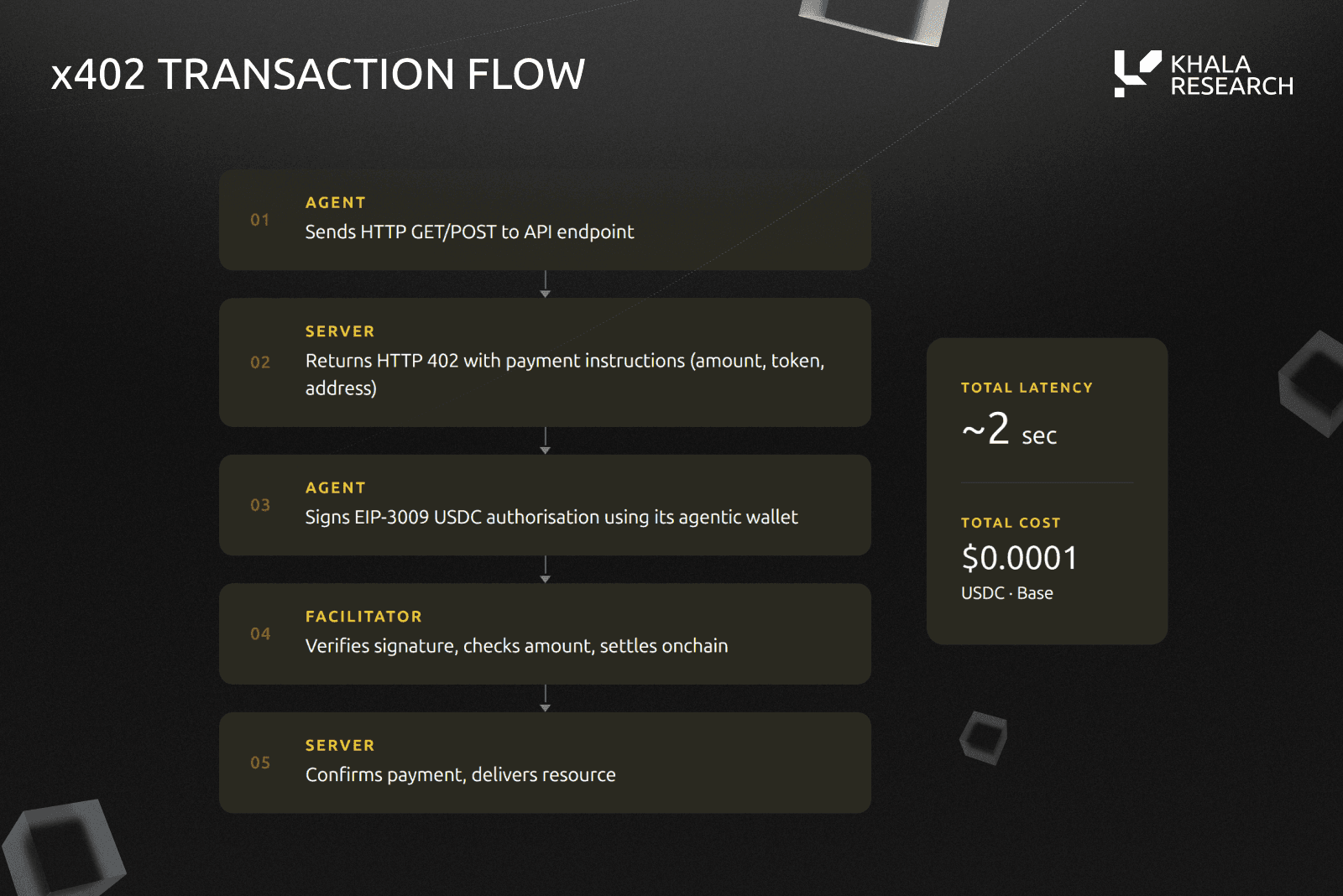
Your API needs to check the payment state before processing a KYC/AML query. If the balance is insufficient, return a 402 Payment Required status code. This response should include a Pay header or a structured body with instructions on how to complete the transaction. This mechanism forces the agent to pause and settle the payment before accessing sensitive compliance data.
Once a payment is initiated, your middleware must monitor the blockchain for confirmation. Use a reliable indexer to detect when USDC is transferred to your designated address. Only after the transaction is confirmed on-chain should you lift the 402 block and allow the agent to proceed with the verification check. This ensures that the payment is irreversible and final before any data is released.
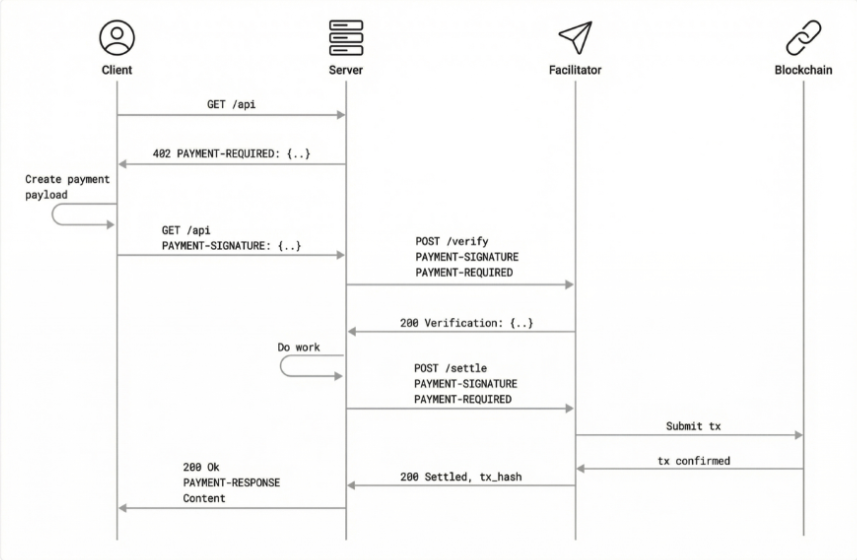
Every successful payment must be logged with relevant metadata, including the transaction hash, timestamp, and the agent's identity. This creates an audit trail that satisfies regulatory requirements for financial transactions. Maintaining clear records of who paid for what is essential for defending against potential AML inquiries.
Integrate KYC verification logic
Before the x402 agent triggers a payment, it must confirm the counterparty’s identity. This isn’t optional decoration; it’s the primary defense against money laundering and fraud in agent commerce. The integration follows a strict sequence mandated by the Customer Identification Program (CIP) and Customer Due Diligence (CDD) standards.
The first step is identity verification. The agent collects basic identifiers—name, date of birth, and government-issued ID—and validates them against authoritative databases. According to Fenergo, this process involves verifying customer identities before any financial interaction occurs [1]. If the data doesn’t match, the transaction halts immediately. No payment is authorized, and no funds move.
Next, the agent performs risk assessment. This is where CDD kicks in. The system checks the user against global sanctions lists, politically exposed persons (PEP) databases, and adverse media sources. If the risk score is high, the agent may request Enhanced Due Diligence (EDD) or simply decline the service. This step ensures that high-risk entities are flagged before they can exploit the payment infrastructure.
To help you choose the right verification layer, here is a comparison of standard KYC approaches:
| Method | Speed | Cost | Best For |
|---|---|---|---|
| Selfie + ID Scan | Fast | Low | Low-risk, high-volume transactions |
| Database Cross-Check | Instant | Medium | Sanctions and PEP screening |
| Manual Review | Slow | High | High-risk or flagged entities |
The goal is to balance security with speed. You don’t need manual review for every transaction, but you do need automated checks that run in milliseconds. The x402 protocol’s ability to embed these checks directly into the endpoint logic ensures that compliance is baked into the payment flow, not bolted on afterward.
Zero-knowledge proofs for identity
Zero-knowledge proofs (ZKPs) allow an agent to prove it holds a valid compliance status without revealing the underlying personally identifiable information (PII). In the context of x402 endpoints, this means the payment token can carry a cryptographic proof of KYC/AML clearance rather than a static JSON payload containing names, dates of birth, or government IDs. This approach aligns with the principle of data minimization favored by regulators like the FATF and privacy-focused frameworks.
When an autonomous agent initiates a transaction, it generates a ZKP that the verification service can validate against public parameters. The receiving agent only sees a boolean "compliant" or "non-compliant" status, along with the necessary cryptographic signature to trust that status. The raw identity data never leaves the issuer’s database, significantly reducing the attack surface for data breaches during agent-to-agent interactions.
Implementing this requires integrating a ZKP library, such as Circom or Gnark, into the agent’s identity module. The agent must first undergo standard KYC with a trusted provider. Upon approval, the provider issues a credential that the agent uses to generate proofs. These proofs are then attached to the x402 token’s metadata, allowing the endpoint to verify compliance before processing any payments.
This method transforms compliance from a data-sharing burden into a cryptographic verification. Agents can operate across jurisdictions without repeatedly submitting sensitive documents, as the ZKP can be designed to satisfy multiple regulatory criteria simultaneously. The x402 token becomes a vehicle for trust, carrying only the evidence of compliance, not the identity itself.
Validate compliance before x402 trigger
Before the x402 protocol releases a payment token, the endpoint must confirm that the counterparty has passed all required regulatory checks. This is not a passive state; it is an active validation step that ensures the API only processes transactions for verified identities. Without this gate, the agent commerce flow risks facilitating non-compliant activity, violating FATF guidelines and exposing the operator to legal liability.
The workflow typically follows this sequence:
The endpoint queries a trusted identity provider or internal database to confirm the user’s KYC/AML status. This check should align with FATF recommendations for risk-based approaches, ensuring that high-risk entities undergo enhanced due diligence before any financial interaction.
Once compliance is confirmed, the system verifies the ZKP attached to the request. The ZKP proves that the user has satisfied the compliance criteria without revealing sensitive personal data. The endpoint must reject any request where the cryptographic proof fails verification or has expired.
Only after both the compliance status and the ZKP are validated does the API return the 402 payment token. This token authorizes the subsequent transaction, ensuring that the payment flow is legally sound and cryptographically secure.
This pre-flight validation acts as the final safety net. It ensures that the convenience of agent commerce does not come at the cost of regulatory compliance. By embedding these checks directly into the x402 trigger, developers create a seamless yet secure experience for users and regulators alike.
No comments yet. Be the first to share your thoughts!